
OpenAI Codex Knowledge Work Expansion: What Changed and When
From Coding Assistant to Knowledge-Work Platform: Codex’s June 2 Expansion Signals OpenAI’s Next AI Agent Bet


The tool millions of developers trusted to write code just crossed into everyone else’s workday. If Codex can now review your documents, build your dashboards, and adapt to your profession, the question is no longer whether AI agents are coming for knowledge work, but whether your workflow is ready.
OpenAI Codex Knowledge Work Expansion: What Changed and When
More than 5 million people signed up for a tool that would help them write, review, and understand code. Around June 2, 2026, OpenAI handed them a knowledge-work platform for data analysts, creative directors, sales teams, and investment bankers.
OpenAI framed the announcement under its “Intelligence at Work” event. The headline: “Codex is becoming a productivity tool for everyone.” That is not marketing copy. It is a genuine statement about a product boundary being crossed. And 5 million existing users are now standing on the other side of it.
Before June 2: Codex as a Developer-Only Tool
Codex had a well-defined lane: coding assistance. Its users were engineers. Its value proposition was technical. Even as OpenAI improved the underlying model and deepened its reasoning capabilities, Codex stayed coding-first.
That focus gave Codex a strong identity. It also set a hard ceiling on who could use it and for what.
The June 2 Expansion Into Knowledge Work
Around June 2, OpenAI introduced three new capability surfaces alongside a model upgrade [OpenAI Official Blog, June 2, 2026]:
Sites: a new surface that extends Codex into content and web creation
Annotations: a structured commentary and markup capability that reaches beyond code
Role plugins: domain-specific bundles that allow Codex to be customized for different professional roles
GPT-5.5: the underlying model powering the expanded product
Author’s note (model name): GPT-5.5 is confirmed as the model powering this expansion [NVIDIA Official Blog, April 23, 2026]. GPT-5.3-Codex was an earlier model released February 5, 2026 [OpenAI System Card, February 2026] that OpenAI sunset on June 2, 2026 [OpenAI Developer Community, June 2026]; it is not the model behind the knowledge-work announcement. No open discrepancy remains.
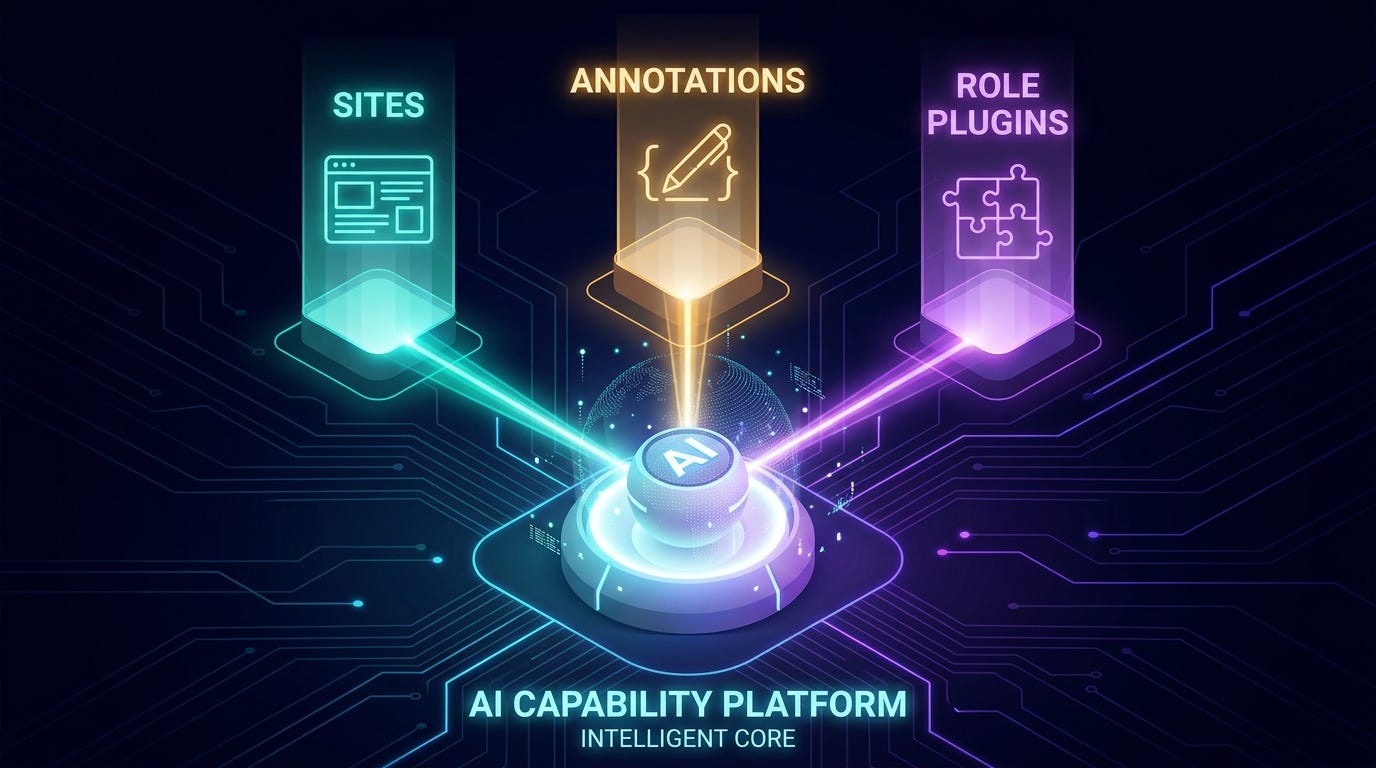
These additions are not incremental improvements to what Codex already did. They extend it into work that has nothing to do with writing or reviewing code.
The Scale Signal: 5M+ Weekly Active Users
OpenAI reported that Codex already serves more than 5 million weekly active users [OpenAI Official Blog via Constellation Research, June 2, 2026]. That number matters for two reasons.
First, this is not a limited preview or research release. It is a broad-surface-area shift delivered to an already-large user base.
Second, the timing is deliberate. OpenAI is not expanding Codex because it is a niche experiment they want to grow. They are expanding it because the user base is large enough to make the platform bet meaningful.
Three new capability surfaces, a new model generation, and 5M+ weekly active users. That combination marks a clear before-and-after moment for what Codex is and who it is for.
What Codex’s New Features Actually Mean for Knowledge Work
Codex’s new features (Sites, Annotations, and Role plugins) tell us what changed. Understanding what each capability implies tells us why the change matters, and why Codex for knowledge work is a meaningfully different product than Codex for coding alone.
Sites: Codex Reaches the Web Surface
What does a coding tool need with a “Sites” feature? It doesn’t. A knowledge-work environment does.
Sites allows users to create and share interactive hosted websites and apps, turning analysis and source materials into dashboards, project boards, review workspaces, and living hubs shareable within a workspace via URL [Pulse2 / OpenAI, June 2026]. The feature is available to Business and Enterprise customers [Pulse2 / OpenAI, June 2026]. OpenAI is partnering with Wix, Base44, Replit, Lovable, Figma, and Emergent in support of this capability [Dataconomy, June 2026].
The name alone signals something important: Codex can now help produce output that ends up in front of an audience, not just inside a development environment. That is a meaningful shift in who can use the tool and for what purpose. Non-developers are a growing share of Codex’s user base. Sites puts Codex-generated output in front of that audience. But output is only half the story. What changes when Codex can participate in the review itself?
Codex Annotations: Structured Review Beyond Code
“Annotations” suggests targeted, structured commentary: the kind of work that editors, reviewers, analysts, and collaborators do across documents, presentations, spreadsheets, and other artifacts.
In a coding context, annotations might mean inline code comments. In a knowledge-work context, they mean something broader. The expanded Annotations capability lets users select specific parts of documents, spreadsheets, slides, or Sites and direct Codex to refine only those elements, without regenerating the entire output [Pulse2 / OpenAI, June 2026]. If Codex can annotate non-code artifacts meaningfully, it becomes useful to a much wider set of workers.
This is the feature that most directly signals the expansion beyond engineering. Annotation is a fundamental knowledge-work activity. Writers annotate drafts. Lawyers mark up contracts. Analysts flag data points. A tool that can annotate is a tool that participates in review workflows, not just generation workflows. That is what AI Agents for knowledge work look like in practice. And when that capability is bundled with domain-specific context for your exact profession, the reach extends further still.
OpenAI Codex Role Plugins Explained: Customization at the Domain Level
Role plugins are the most platform-like of the three additions. The term “plugin” implies extensibility. The term “role” implies domain or professional-context specificity. Together, they describe a mechanism for tailoring Codex to the needs of a particular kind of worker or team.
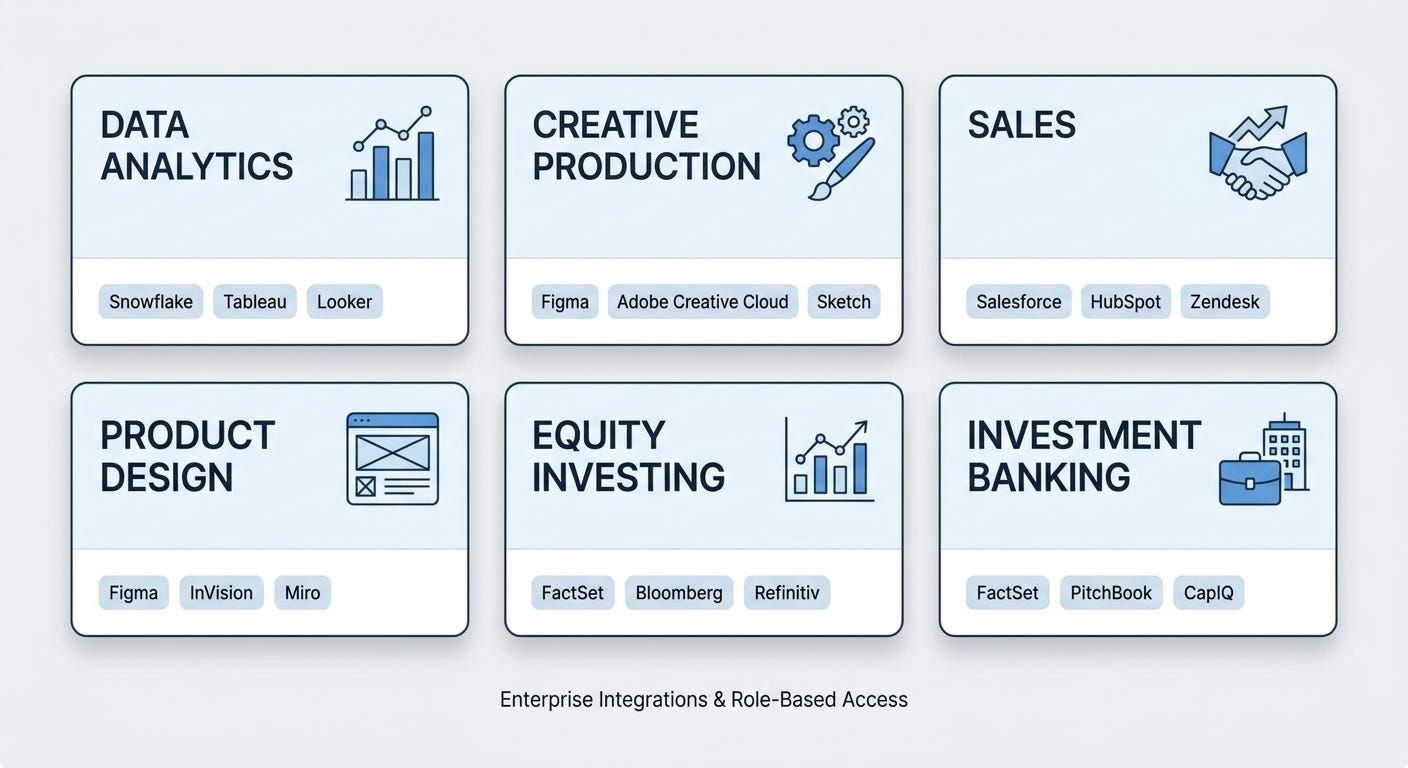
OpenAI launched six role-specific plugins aimed at specific jobs: data analytics, creative production, sales, product design, equity investing, and investment banking [TechCrunch, June 2026]. Each plugin bundles integrations, instructions, and context to allow Codex to approximate a specific job [TechCrunch, June 2026]. The data analytics plugin connects to tools such as Snowflake, Databricks Genie, Hex, and Tableau; the creative production plugin connects to Figma, Canva, Shutterstock, and Picsart; the sales plugin connects to Salesforce, HubSpot, Outreach, and Clay; and the public equity investing plugin connects to Moody’s, FactSet, LSEG, S&P, PitchBook, and Hebbia [Pulse2 / OpenAI, June 2026]. OpenAI has indicated that additional roles (including corporate finance, private equity investing, marketing strategy, strategy consulting, and legal) are planned [Pulse2 search summary, June 2026; TechCrunch, June 2026].
This matters because OpenAI is not just adding features. They are building a layer through which Codex can be configured for use cases that OpenAI does not have to define in advance. A platform with a role-plugin system can grow into domains its designers never explicitly targeted.
The existence of Role plugins is the clearest indicator that OpenAI is treating Codex as a platform for AI Agents, not a point solution.
GPT-5.5: A Model Upgrade Tied to a Product Expansion
The pairing of GPT-5.5 with the launch of Sites, Annotations, and Role plugins is not coincidental. The new capability surfaces are being introduced at the same time as a model with stronger general-purpose reasoning: the kind of reasoning that agentic AI work across non-coding domains demands.
That is a deliberate choice. If the previous model were sufficient, the expansion could have launched earlier. The model upgrade and the product expansion being coupled suggests that the knowledge-work use cases require capabilities the prior generation did not reliably deliver.
A model tied to a product expansion signals that the expansion is not cosmetic. The underlying AI capability has to keep pace with the new surface area, and in this case, it has.
The features tell you what changed. The strategy tells you why it matters. Each of Sites, Annotations, and Role plugins is a product decision; taken together, they describe a clear direction: Codex is becoming a general-purpose agentic AI environment for knowledge work, not just a tool for engineers.
Why This Matters: OpenAI Codex as a Knowledge-Work Platform
OpenAI Codex’s June 2 expansion marks a genuine platform shift: from a coding tool to a general knowledge-work environment. The trajectory these features define is more interesting than any individual capability. That reframing is the lens that makes the expansion legible.
The Familiar Pattern: AI Tool to Platform Strategy
Codex is following a well-worn path in tech product development. A tool launches with a narrow, well-defined use case (in this instance, coding assistance). It gains users, builds trust, and accumulates enough scale to justify a broader bet. Then it expands.
Search engines did this. Productivity suites did this. Cloud platforms did this. The pattern is recognizable: establish a beachhead in a high-value niche, prove the model, then expand the surface area once adoption is solid.
What is notable about Codex’s version of this trajectory is the speed. The tool had already reached 5 million weekly active users before the expansion was announced [OpenAI, June 2026]. That is not a small base to be building on. That is a significant installed audience that OpenAI can now offer new value to, and a large set of workflows into which AI Agents can now extend.
What Codex’s Platform Expansion Means for Knowledge Workers Beyond Engineering
So who is the intended Codex user after June 2? Not primarily a developer.
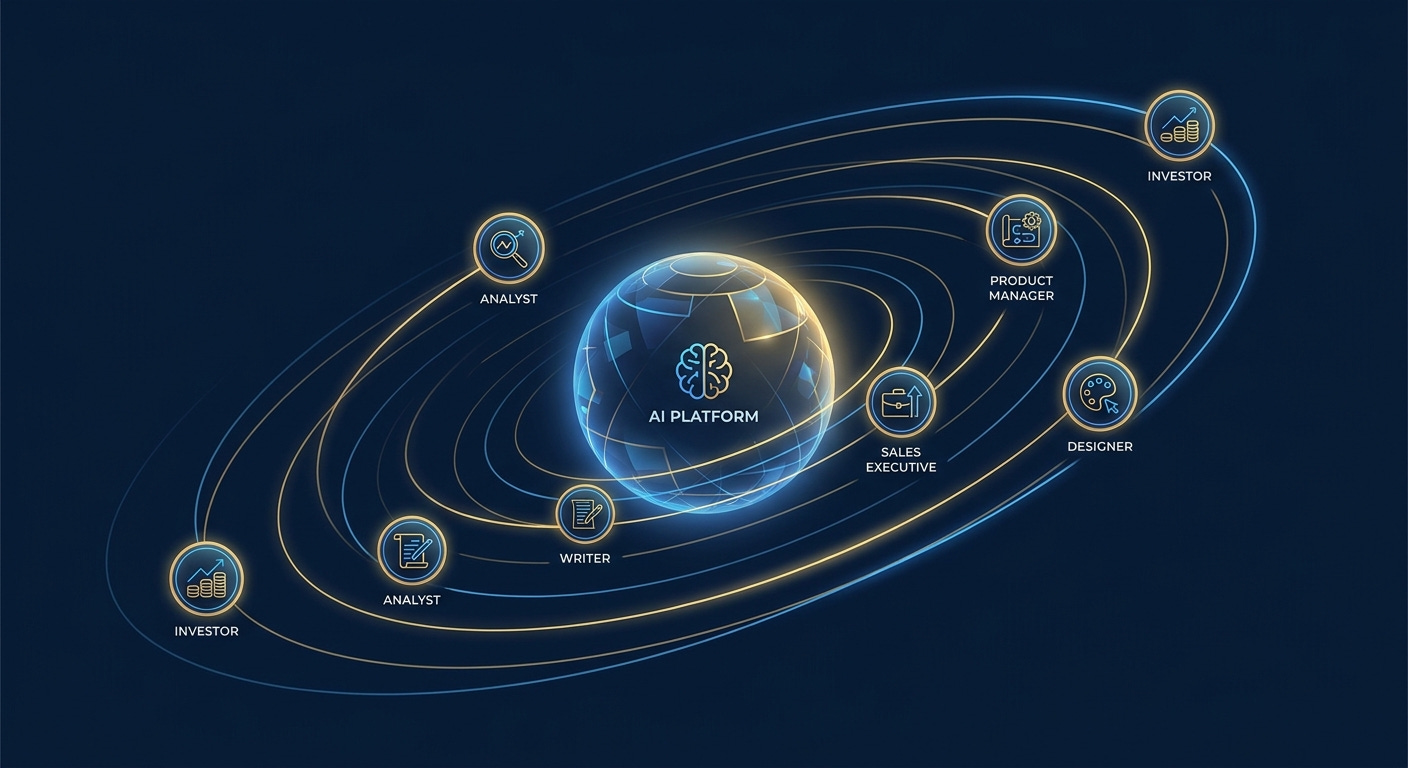
Sites and Annotations, in particular, describe work that product managers, writers, analysts, designers, and other knowledge workers do every day. If you manage a product, you annotate requirements and review specs. If you write, you draft and revise documents. If you analyze, you mark up data and summarize findings. Codex now has surfaces that touch all of these activities.
This does not mean developers are being deprioritized. The coding capabilities remain. But the addressable population for Codex is now substantially larger than the engineering community. That has implications for how organizations think about licensing, access, and workflow integration.
What 5M+ Weekly Active Users Means for AI Platform Ecosystem Gravity
Platform gravity is a real phenomenon. When a tool reaches sufficient scale, the ecosystem around it (integrations, plugins, training material, community knowledge, institutional familiarity) makes switching costly and adoption self-reinforcing.
At 5M+ weekly active users [OpenAI, June 2026], Codex is approaching the kind of scale where ecosystem gravity starts to matter. The introduction of Role plugins is particularly relevant here: a plugin ecosystem grows in value as more users adopt the platform. Third-party builders, enterprise teams, and domain specialists will have increasing incentive to build for Codex as the user base grows, and to build AI Agents specialized for work that OpenAI has not defined yet.
OpenAI appears to understand this. The plugin architecture is not just a feature; it is an invitation for the ecosystem to extend Codex into domains OpenAI cannot fully anticipate.
Open Questions and Things to Watch
The June 2 announcement sets up several questions worth tracking.
Model lineage. The June 2026 expansion runs on GPT-5.5 [NVIDIA Blog, 2026; OpenAI, June 2026], OpenAI’s broader frontier model released April 23, 2026 [OpenAI, April 2026]. It replaced GPT-5.3-Codex (the prior Codex-specific model released February 5, 2026 [OpenAI, February 2026]) as the engine powering the platform. The model transition is confirmed. What it means for future Codex-specific model development is a question worth tracking as OpenAI’s model strategy continues to evolve.
Feature mechanics. The confirmed facts are the feature names and the scale number. The detailed behavior of Sites, Annotations, and Role plugins (how they work, what they cost, what they can and cannot do) will determine how much of the potential implied by their names is actually delivered.
Enterprise adoption. At 5M+ weekly active users [OpenAI, June 2026], Codex is already significant for individuals and teams. The Role plugins suggest an enterprise angle. How organizations integrate a knowledge-work-capable Codex into their existing tool stacks will be one of the more consequential adoption stories to follow.
Competitive response. Codex is not operating in isolation. Other AI coding and knowledge-work tools are evolving rapidly. The competitive implications of Codex’s platform evolution will become clearer as other platforms respond.
What This Platform Shift Means: Key Takeaways for Knowledge Workers
“Codex is becoming a productivity tool for everyone” [OpenAI, June 2026] is a genuine statement of product intent, not a tagline. The expansion into Sites, Annotations, and Role plugins, powered by GPT-5.5 and delivered to an existing base of 5 million weekly active users [OpenAI, June 2026], marks a real product boundary being crossed.
For developers, this is an evolution of a familiar tool. For knowledge workers outside engineering, it is an opening. For organizations, it is a signal that AI assistance is no longer just about writing code; it is about the full surface area of knowledge work with AI Agents capable of participating in the review, analysis, and creation workflows that define professional output.
The most important thing to understand about the June 2 expansion is not what it delivered on day one. It is what the architecture it introduced makes possible next.
Codex, once the AI agent for developers, is now reaching for something larger.
Related Articles
If this article sparked ideas you want to follow further, these pieces cover the patterns directly:
Harness Engineering vs Context Engineering: The Model is the CPU, the Harness is the OS OpenAI describes Codex’s June 2 expansion as making it ‘a productivity tool for everyone’, but what does it mean for a coding tool to become a knowledge-work platform? This foundational article provides the mental model: the model is the CPU, the harness is the OS. It explains what separates a coding assistant from an agentic AI environment, why the harness layer (orchestration, tool dispatch, session management, Role plugins) is the real product, and how to evaluate any AI platform expansion using this framework. Essential reading before evaluating Codex’s Sites, Annotations, and Role plugin architecture.
MCP, AGENTS.md, and the Agentic AI Foundation: How Open Standards Are Ending Agent Lock-In Codex’s Role plugins are proprietary extension points that bundle integrations and context for specific professional domains. This article covers the other path: the Model Context Protocol, the AGENTS.md convention, and the Agentic AI Foundation’s open-standards push that is simultaneously reshaping the same market. Understanding the tension between Codex’s proprietary plugin ecosystem and the open-standards movement is the competitive subtext the June 2 announcement doesn’t address directly, but every enterprise team evaluating Codex for knowledge work needs to understand.
Agent Framework Wars 2025: Your Strategic Guide to Choosing the Right AI Agent Stack The Codex knowledge-work expansion didn’t happen in a vacuum. This strategic overview maps the competitive landscape that preceded it, covering the agent stacks, evaluation criteria, and architectural trade-offs that defined how enterprises chose their first AI agent platform in 2025. Reading it alongside the Codex announcement reveals which bets from 2025 the June 2 expansion validates, which alternatives were already serving knowledge workers before Codex expanded, and how to think about the competitive response OpenAI’s platform move will trigger.
The Agent Teams Buildout: How Claude Code Quietly Shipped Multi-Agent Coordination Across 2.1.x Codex’s Role plugins target data analysts, creative directors, and investment bankers, roles that Anthropic’s Claude Code is also serving through a different architectural path. This companion piece explores how Claude Code is developing native multi-agent coordination capabilities, including worktree-based isolation and agent lifecycle hooks, as the author defines and examines those concepts. If Codex’s platform expansion puts it on your shortlist alongside Claude Code, this article gives you the architectural detail to make a direct comparison on multi-agent capability.
Claude Code Subagents and Main Agent Coordination: A Complete Guide to AI Agent Delegation Patterns Codex’s June 2 expansion is about AI Agents participating in knowledge-work workflows: review, analysis, and creation across professional domains. This article maps the AI agent delegation patterns that make that participation reliable in practice: hub-and-spoke orchestration, context boundary design, isolation strategies, and the coordination logic that determines when to spin off a subagent versus keeping work in a single context. The patterns apply across coding harnesses and are directly relevant to evaluating how Codex’s Role plugins and Annotations capability will behave at the workflow level.
References
OpenAI. “Intelligence at Work” announcement and Codex productivity expansion. June 2, 2026.
OpenAI. Official Codex announcement reporting 5 million weekly active users. June 2, 2026.
NVIDIA. Official blog coverage confirming GPT-5.5 as the model powering the Codex knowledge-work expansion. April 23, 2026.
OpenAI. GPT-5.3-Codex system card. February 2026.
OpenAI Developer Community. Notice of GPT-5.3-Codex sunset. June 2026.
Constellation Research. Coverage of OpenAI’s Codex announcement and 5 million weekly active user figure. June 2, 2026.
Pulse2. Coverage of Codex Sites, Annotations, Role plugins, availability, and integrations. June 2026.
TechCrunch. Coverage of OpenAI Codex Role plugins for data analytics, creative production, sales, product design, equity investing, and investment banking. June 2026.
Dataconomy. Coverage of OpenAI’s Codex Sites partnerships with Wix, Base44, Replit, Lovable, Figma, and Emergent. June 2026.

About the Author — Claude Certified Architect
Rick Hightower helps companies become AI-first through practical mentoring, executive and team training, and custom AI solution development. A former Senior Distinguished Engineer at a Fortune 100 company, Rick focused on bringing ML and AI insights into real front-line business applications.
Rick is a Claude Certified Architect, AI systems practitioner, builder of production multi-agent systems, creator of Skilz, and author of an upcoming Manning book on Harness Engineering.
Ready to make your company AI-first? Connect with Rick on LinkedIn, Substack or Medium, book him to speak or train your team, or visit Spillwave to explore mentoring, training, and custom AI solutions for your organization. Check out Rick Hightower’s SpeakerHub.